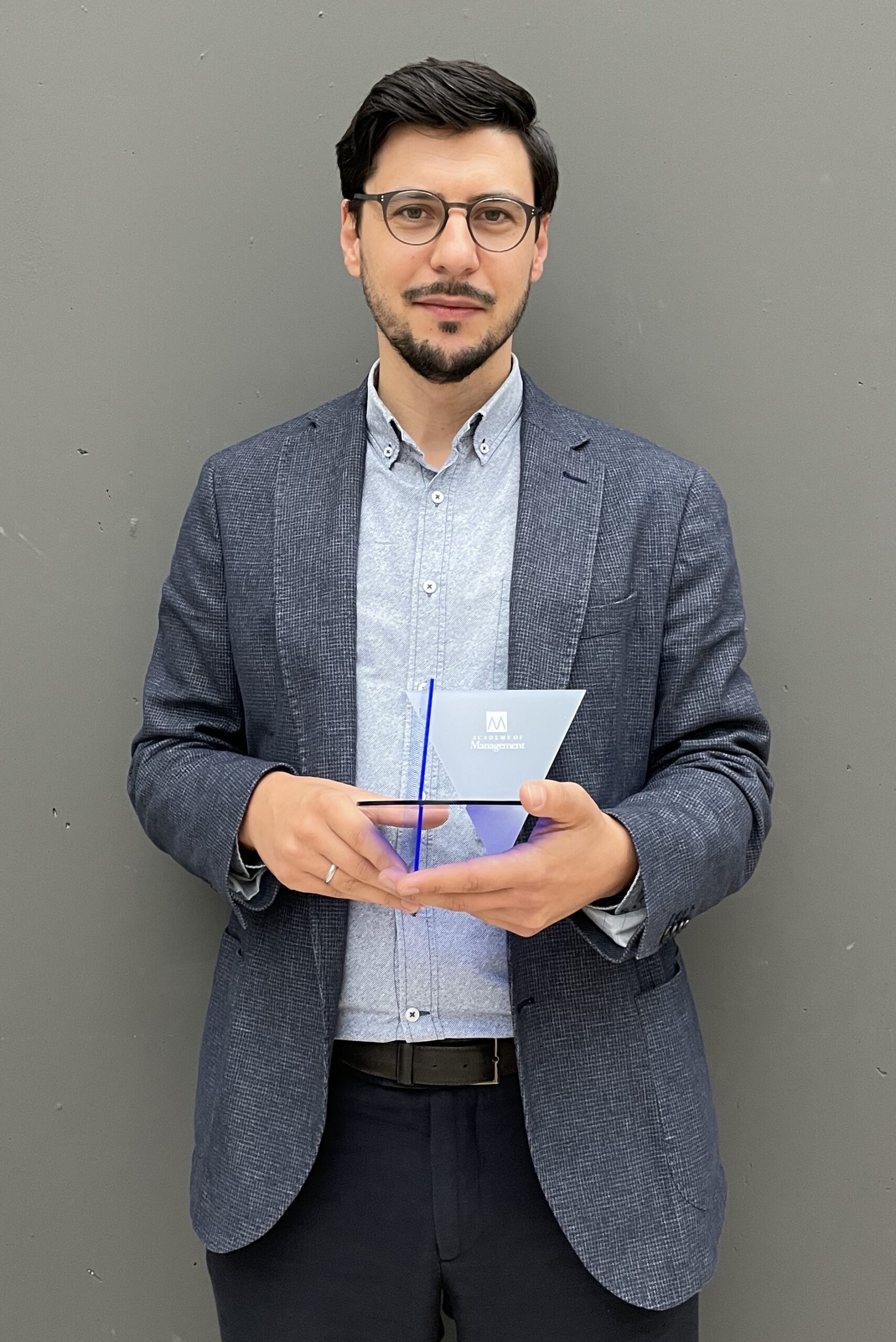
Have moved to substack to offer more regular updates. The first post is a bit of a re-view of 2026 so far.
Have moved to substack to offer more regular updates. The first post is a bit of a re-view of 2026 so far.
It is the time of the year where we look back to look forward. It is my honour to work with teams at LMU IES, LMU IEC, HIIG IES and the VHB to contribute to business & society.
We published articles on impact valuation, decoloniality & management scholarship, public entrepreneurial opportunities, digital (ir)responsibility, impact entrepreneurship, and jurisdictional struggles & innovative templates to name a few. We also engaged with a broader audience through newspaper articles in Zeit and FAZ – and an interview in F&L.
At LMU IES, our team has worked in projects with the Impact Alliance as well as the Impact Measurement Valuation Lab – which published the Impact Readiness Guide this year. Of course, futures remain ever present.
At LMU IEC, we continued to reach students, researchers and practitioners through education, ideation, incubation, and research with MOOCs like impACTup!, bootcamps, seminars, events, coaching, mentoring, and our flagship incubator.
We secured the future of HIIG thanks to our new partners Mercator Foundation, Joachim Herz Foundation and Foundation Science & Democracy. At HIIG IES, we worked on projects around AI & future of work, alternative platform business models, and the intersection of business, society & digitalization.
At the VHB, we aim to bring business & society closer together both in our work and our discourse including through our new VHB Forum format.
Deeply grateful to work (and more) with engaged colleagues & friends: scholars, practitioners, changethinkers and changemakers.
To keep it very brief. I’d like to highlight work on AI & leadership, self-transcendent leadership, constellation complexity, impact without imposition, and futures.
We finished various projects including our largest on Digitalization, Sustainability & Entrepreneurship in the Global South.
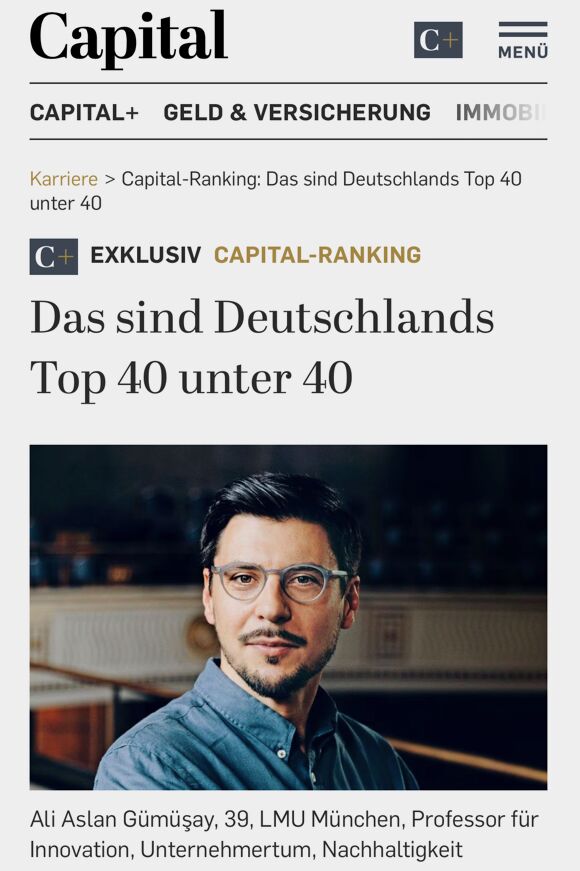
And I was humbled to be selected as one of Capital 40 under 40. Rightly put by my team on my following birthday: they crossed out the “under”… Age is (not) only a construct.
My blogposting activity is lagging. So here is another summary:
Have joined LMU Munich and work with a wonderful team at the Professorship of Innovation, Entrepreneurship & Sustainability as well as the LMU Innovation & Entrepreneurship Center.
Three publications I’d like to mention are on resilience, digitalization & sustainability, religion and entrepreneurship, and management task forces.
A lot is also happening on futures including a Call for Papers for a special issue in Organization Studies on Utopias-Dystopias as sources of organizations and organizing, activities by our EGOS Standing Working Group, and multiple symposia and workshops at AOM including on organizational imaginaries, impact measurement and digital organizing.
Lastly, I’d also like to mention a related BMBF project: The Impact Measurement and Valuation Lab (IMV-Lab) research project explores the impact measurement and valuation potential for social innovations. The project focuses on the assessment, critical reflection and empirical employment of approaches for measuring ecological and social factors. The objective is to develop and apply a set of instruments for measuring the ecological and social impact of social innovations.
And we have also just started a project on “Transformative Skills for Sustainability” and finished a very large project on “Sustainability, Entrepreneurship and Global Digital Transformation“.
I hope the links offer a pathway into these topics.

So there were no blogposts in 2022. It’s been hectic. Here are a few items:
I had joined the University of Cambridge as a Visiting Fellow, specifically as a Research Fellow at Cambridge Judge Business School, Visiting Associate at Hughes Hall, and Visiting Scholar at the Leverhulme Centre for the Future of Intelligence. My research focused on AI, Grand Challenges, and the Future of Organizing.
There were a couple of exciting publications including a study on AI, entrepreneurship & society with a quick overview on our blog, a brief piece on the future of work, a chapter on sustainable business and an article on organizations, institutions and war with a related open access lecture here, an article on platforms, and a whole open access volume on grand challenges. Please find more here.
We also got some awards including the European Management Review best paper award for a piece on contextual expertise, new funding for projects around digital organizing and organized multiple events on the twin transitions/transformations digitalization & sustainability. Let me stop here. I was more thorough with updates throughout the year on Linkedin.
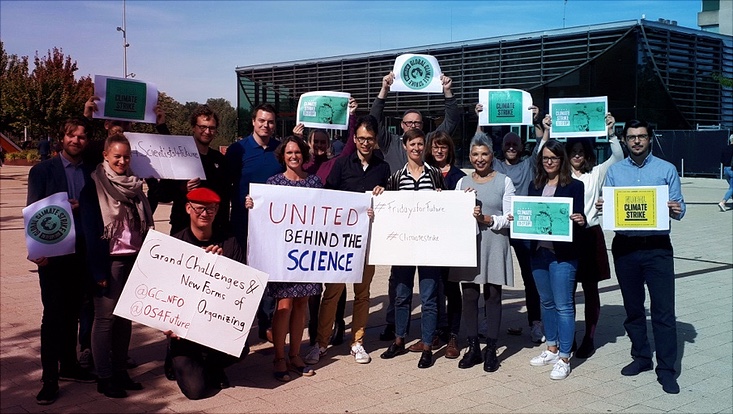
Unser DFG Netzwek “Grundlegende gesellschaftliche Herausforderungen und Neue Formen des Organisierens” kommt zu seinem natürlichen Ende. Das Netzwerk traf sich fünfmal und pflegte auch zwischen den Treffen einen intensiven Austausch. Die Treffen fanden von 2018 bis 2021 an fünf unterschiedlichen Standorten und Institutionen statt. Jedes Treffen bot ein vielfältiges Angebot bestehend aus inhaltlichen Auseinandersetzungen und sozialen Aktivitäten sowie Planung des Research in the Sociology of Organizations (RSO) Volumen und je zwei Keynotes. Darüber hinaus gab es einen regelmäßigen Austausch auf Konferenzen wie die Academy of Management (AOM) oder der European Group for Organizational Studies (EGOS) und durch Online-Treffen.
| Datum | Ort | |
| Treffen I | 04.-05.10.2018 | Universität Hamburg |
| Treffen II | 14.-15.03.2019 | Vrije Universiteit Amsterdam |
| Treffen III | 19.-20.09.2019 | Rotterdam School of Management |
| Treffen IV | 05.-06.03.2020 | Leuphana Universität Lüneburg |
| Treffen V | 20.-21.09.2021 | Humboldt Institute for Internet and Society (HIIG), Berlin |
Treffen I: 04.-05.10.2018
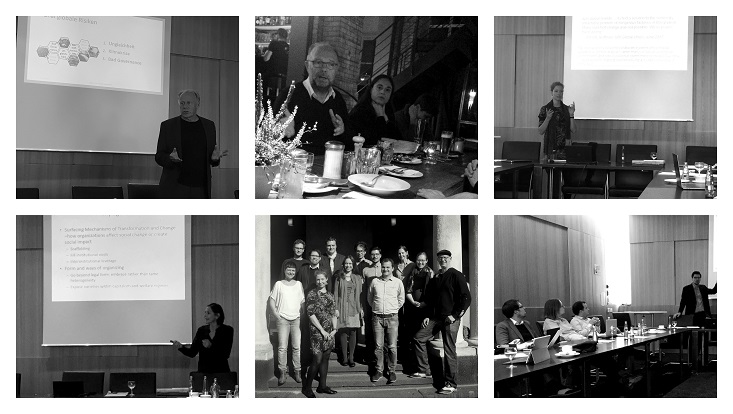
Ziel des ersten Treffens war ein Verständnis für die Komplexität der Grand Challenges und neuer Formen der Organisation zu entwickeln. Es sprachen Keynote-Speakers Johanna Mair, Professorin an der Hertie School of Governance (über ihre Erkenntnissen zum Verhältnis zwischen Innovation und Skalierung) und Juliane Reinecke, Professorin am King’s College London (über ihre Arbeit zu nachhaltigem kollektiven Engagement). Bernd Ulrich, stellvertretender Chefredakteur der deutschen Tageszeitung Die Zeit, hielt eine Dinner-Rede über zentrale Probleme unserer Zeit: den Klimawandel, die Verschiebung der globalen Machtdynamik und die nationalen Folgen. Jürgen Trittin, ehemaliger deutscher Bundesminister für Umwelt, Naturschutz und nukleare Sicherheit sowie kurzzeitig Bundesminister für Ernährung und Landwirtschaft, sprach über ähnliche Probleme wie Ungleichheit, Klimawandel und schlechte globale Governance.
Treffen II: 14.-15.03.2019
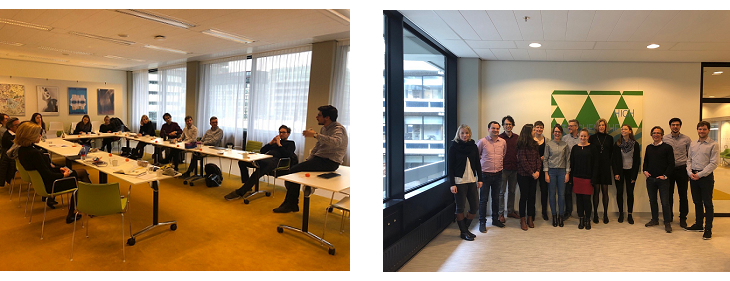
Es sprachen an der VU Amsterdam die Keynote-Speakers Jennifer Howard-Grenville, Professorin an der Judge Business School der Universität Cambridge, und Frank de Bakker, Professor an der IESEG School of Management in Lille, Frankreich. Wir erörterten einflussreiche aktuelle Beiträge zur akademischen Literatur über Grand Challenges und neue Formen des Organisierens; und widmeten uns der Frage, wie diesen Herausforderungen in unserer eigenen Forschung, Lehre sowie in der Praxis begegnet werden kann. Wir diskutierten, wie eine Wissenschaft gefördert werden kann, die dazu beiträgt, Grand Challenges durch neue Formen der Organisation anzugehen. Ebenso zentral waren methodische und pädagogische Herausforderungen sowie verschiedene Strategien, um mit unserer Arbeit eine deutliche Wirkung zu erzielen.
Treffen III: 19.-20.09.2019
Es sprachen an der Rotterdam School of Management (RSM) die Keynote-Speakers Tima Bansal von der Ivey Business School (zu Managementtheorien und Nachhaltigkeitsstrategien) und Joep Cornelissen von der RSM (zu Organisationstheorien im Zusammenhang von Grand Challenges). Auch haben wir das weitere Vorgehen des RSO Volume geplant – samt darin erscheinende Kapitel sowie anschließender Mitteilung der Ergebnisse in Wissenschaft und Gesellschaft.
Treffen IV: 05.-06.03.2020
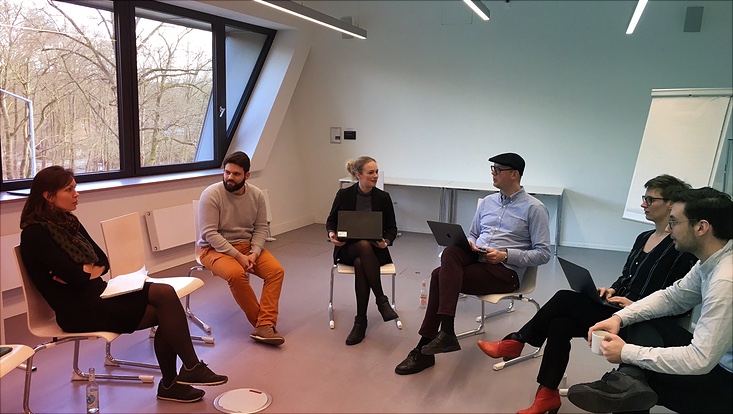
Es sprachen an der Leuphana Universität Lüneburg die Keynote-Speakers Professorin Jana Costas von der Europa-Universität Viadrina (mit kritischer Perspektive auf den Begriff der wissenschaftlichen Öffentlichkeitsarbeit) und Professorin Laura Marie Edinger-Schons von der Universität Mannheim (über die beeindruckenden Lehr- und Aufklärungsmaßnahmen, die ihr Team und sie mit einer Vielzahl von Partner*innen durchführen). Vorträge und Diskussionen zu Formen der Lehre, Formen der Gestaltung/Organisation, Formen der Prüfung und “Best Practices” in der Öffentlichkeitsarbeit förderten die Debatte darüber, wie Forschende mit Fachleuten und der Gesellschaft im Allgemeinen in Kontakt treten können.
Treffen V: 20.-21.09.2021
Das fünfte und letzte Netzwerktreffen der Forschungsgruppe war auch das erste persönliche Treffen seit dem Beginn der Pandemie. Es sprachen am Humboldt Institut für Internet und Gesellschaft in Berlin die Keynote-Speakers Professorin und Co-Gründerin von Scientists for Future Maja Göpel (zu Wissenschaftlichkeit als bedingte Entstehung oder bewusste Entscheidung) und Professor Gert Wagner (zu Wissenstransfer). In ihrem Workshop verbanden Professor Leonhard Dobusch und Dr. Anna Jobin eine Vielfalt an Herausforderungen mit Medienaufmerksamkeit und Arbeitsbelastung. Abschließend besprachen wir die nächsten Schritte des DFG Netzwerks für die nahe Zukunft inklusive Förderung und Publikationen.
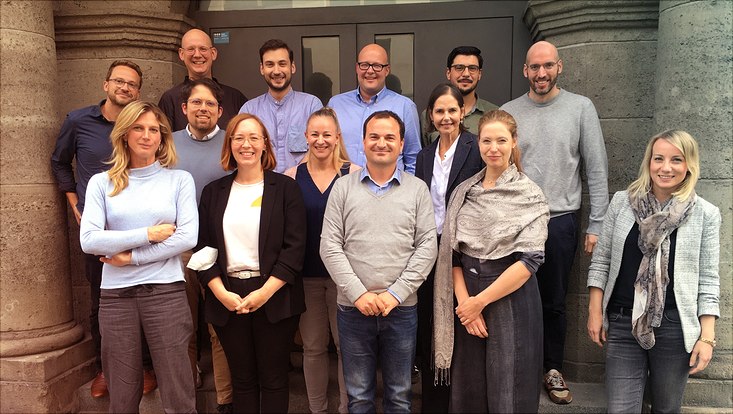
Fazit: Das Netzwerk endet, die Arbeit geht weiter.
Let me share a couple of links related to AI, entrepreneurship, and grand challenges – all in German:
Interview on open science in German with English translation. “Generally I see Open Science as an opening into society. If I believe that I as a scientist should serve society, then Open Science is a tool for doing it….”
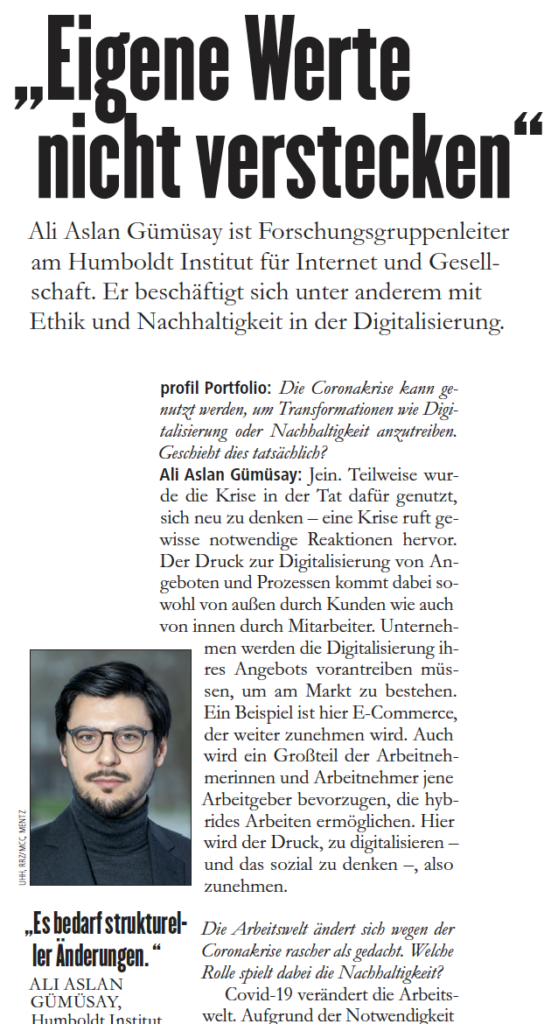
Habe in den vergangenen Wochen mehrere Interviews an der Schnittstelle von Digitalisierung und Nachhaltigkeit gegeben – für das Magazin Profil, dem VHB mit 3 Thesen, und für den Howoge Nachhaltigkeitsbericht.
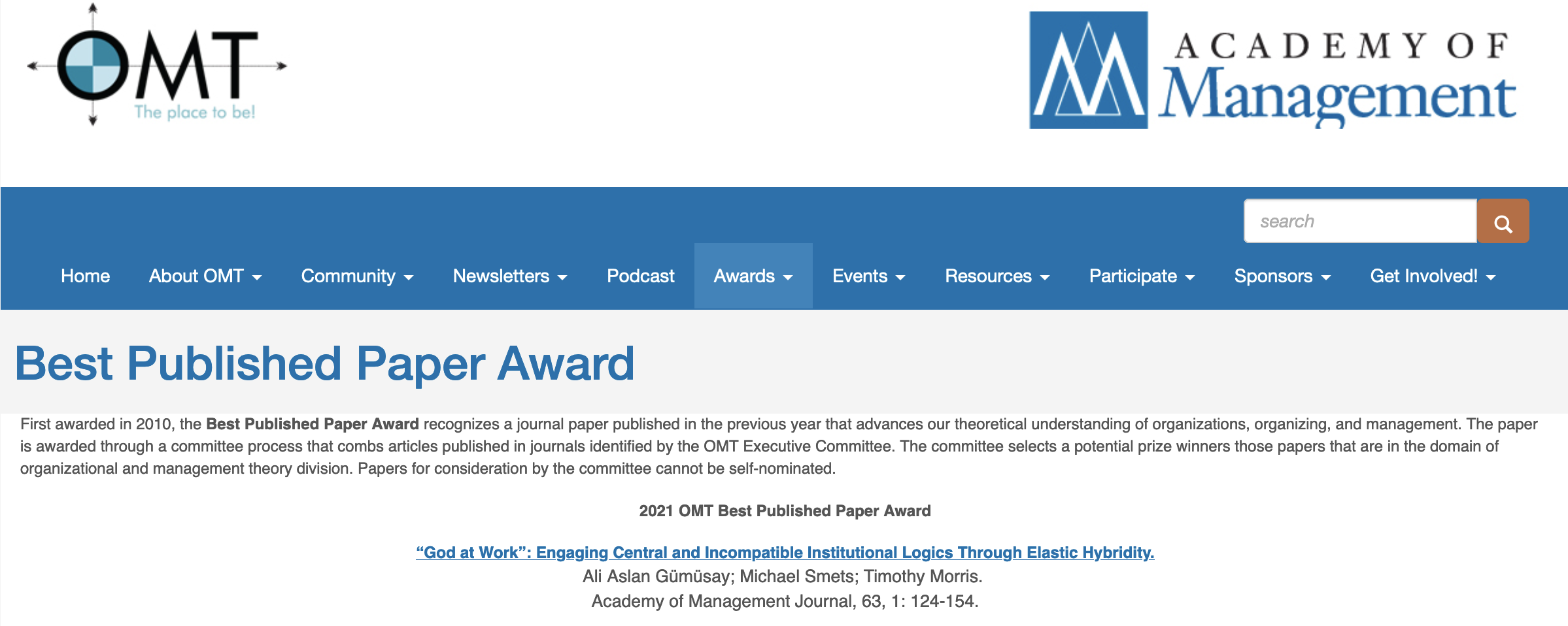
I am so happy, honored & humbled to win together with Michael Smets and Tim Morris the 2021 OMT Best Published Paper Award for the article ’God at Work’: Engaging Central and Incompatible Institutional Logics Through Elastic Hybridity published at the Academy of Management Journal.
I think this is the highest achievement for an article in my discipline. It is deemed the best article within organization and management theory among all articles published in all journals in 2020 (in the entire universe, of course, too ;). For me, it feels a bit akin to winning a Nobel Prize, just without the money – which would have been nice.. 😉
So here is my Oscar, I mean OMT Best Published Paper Award “acceptance speech”:
Thank you to so many anonymous heads, hearts and hands: I was told that multiple committees went through a step-by-step screening process for this award. To all those anonymous colleagues: thank you. Much of our work as reviewer and colleague remains formally unrecognized, but it is actually at the centre of our profession. It keeps our profession together. Thank you Michael Lounsbury for chairing this selection process. Thank you Elaine Hollensbe for being a tough but just editor. Thank you Michael and Tim for embarking on this 6-year journey together.
Thank you to my academic homes during this process: Oxford, WU Vienna, Hamburg and HIIG and to colleagues that make academia meaningful and a collective pursuit. This article – like most – is a co-production and effort of the many. It would not have been thought-able without previous work in, for instance, institutional and paradox theories. And it would not have been writ-able without the countless conversations that continuously transform my, our thinking. Every article deserves an “et al” of the many.
Thank you to my family for enduring the oddities of an academic mind, who is ultra-happy if he receives a very high risk revise-and-resubmit. We are odd creatures. At some point my son spoke of “A M J”. So this work leaves its mark on us, families and friends.
Let me also mention a few other thoughts. Academia is painful and more often about rejections (not failures!) then acceptances (conditional, of course…). Just 3 weeks ago I received a 2nd round reject in a so-called A+ journal. This happens to all of us. We are in this together.
Also, academia is about so much more than publishing. Publishing may be the necessary condition for tenure and jobs (and here personally, I believe in diversifying our metrics and cherishing a diversity of excellence), but it is not, in my opinion, a sine-qua-non condition for being a good academic. And this sole metric has made some of us instrumentally outcome (publish: yes/no) rather than process-focused (intellectual pursuit: yes/no). Personally, I cherish the reviewing process to make a paper better. And I cherish equally the kind and intriguing conversations at conferences or in hallways – with a delicious coffee. We all know this feeling when reading a new thought in a book or article or a conversation that makes us re-think and think further. Am simply loving it. So – and here some of you may differ – I would not see my academic life as a success if I have published only A+ publications, but rather written a mix of intriguing articles and complemented them with having impact – intellectually and practically. By having helped to steer this ship that we call OMT and its adjacent “real worlds” slightly forward in a collective effort.
I simply enjoy too much the intellectual conversations with colleagues about something meaningful and the sparkling eyes of practitioners when a concept truly matters. Please see this as an invite to approach me at conferences and elsewhere. Especially after 1,5 years of digital conferences, my heart and mind yearn for meeting people in person and to talk about research, about society, and also the manifold other topics that make our lives colorful (children, coffee, nature, Karate, …).
If you ask yourself what the article we got the award for is actually about: It is about how to achieve unity in diversity despite competing values that are both incompatible and central to the organization and its employees. Through what we call elastic hybridity organizations are capable of institutionally bending without organizationally breaking thereby enabling individuals to practice more of their personal convictions at work while still experiencing a sense of shared organizational purpose. For more:
What’s next for me, i.e. what keeps me awake? I am very intrigued by questions at three intersections: values and organizations; grand challenges and organizations; and digitalization and organizations. A couple of articles here are forthcoming and I am more than happy to share them with you. At the HIIG in my research group, we work on AI, platforms, open innovation and digital (social) entrepreneurship. Happy to share more about our findings here, too.
But for now, I shall celebrate. 🙂
Update. Here is the award interview:
And the award itself: