
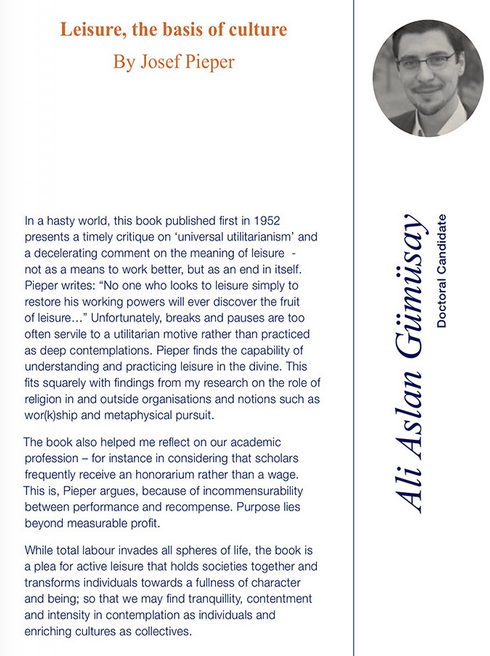
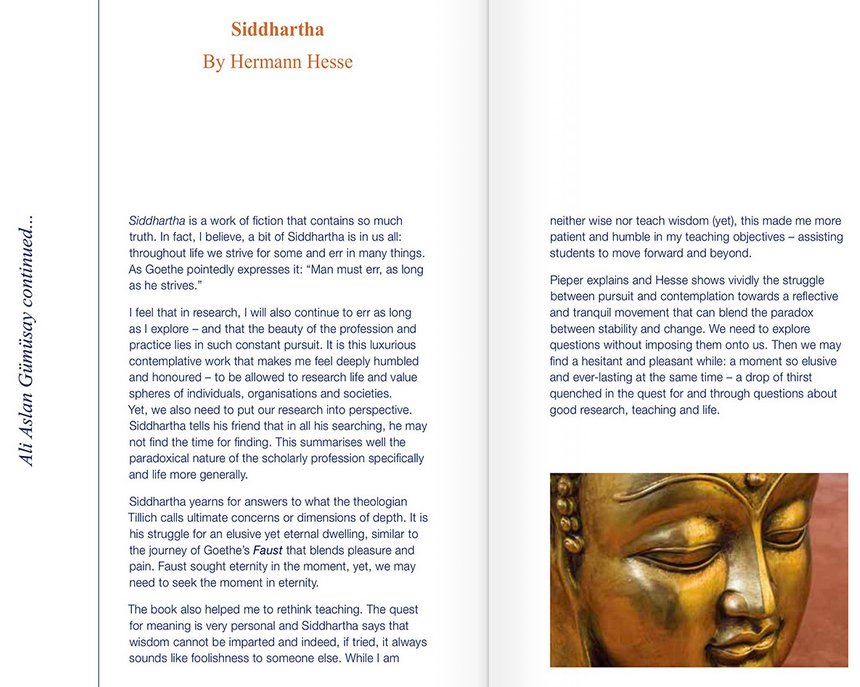
The Said Business School community collected notable works. My contributions are comments on “Leisure, the basis of culture” and “Siddhartha”.
Peter Tufano, Dean: “The compilation – like its predecessor, Critical Thinking 2012 – takes as its starting point the premise that the way that a community comes together is not determined by individuals’ qualifications, skills, or research profiles, but by their ability and willingness to share the way they think and feel, especially about the ideas that have profoundly influenced them.”
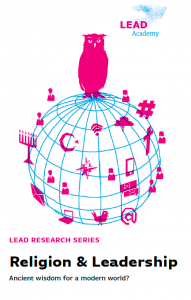 Ancient Wisdom for a Modern World?
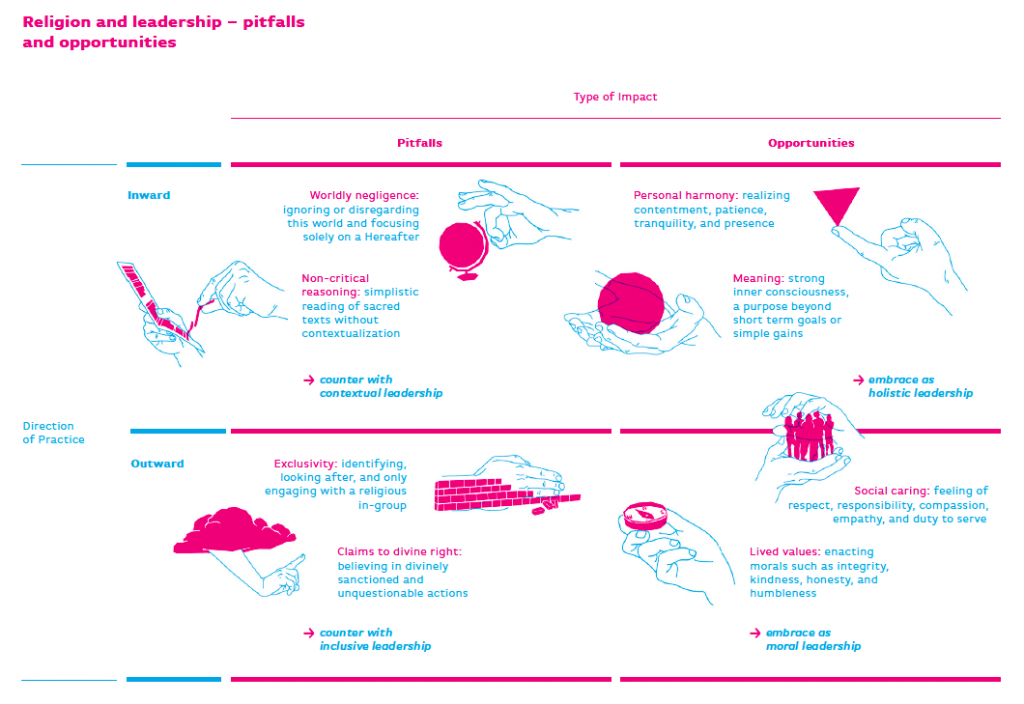 How should leaders engage with religion?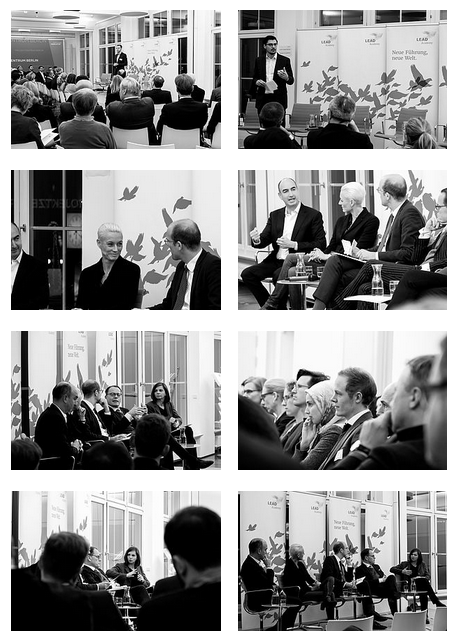
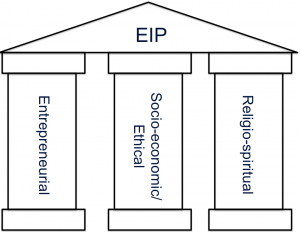
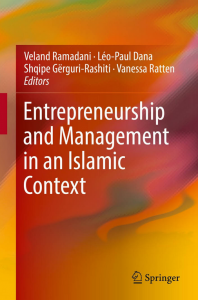 While religion matters in entrepreneurship and management practice, its theory and theorization is dominated by a sacralized secular hegemony. Yet, religion is a social fact that matters in and around organizations; and the social sciences explain – not prescribe – reality. Islam specifically is the second largest religion in the world with a growing number of adherents. Religion in general and Islam in particular thus warrants much more critical engagement and analysis through management scholars. Such scholarly pursuits connect work with worship to examine what I call ‘wor(k)ship’, whereby religious people wish to do well while adhering to their faith, rather than compartmentalizing their lives into different spheres.
 Der Essay “
 Wir plädieren für mehr Weisheit in der Bildung durch Bildungsgerechtigkeit, Bildungsvielfalt und Bildungsflexibilität. Bildung heute fühlt sich für uns Knowmaden zu häufig eher nach einem einengenden Korsett, als nach einem Schlüssel zu mannigfaltigen Handlungsoptionen an. Deshalb brauchen wir flexiblere und mobilere Bildungspfade, Bildungsabos und Bildungsmodule sowie ein ganzheitliches Bildungsverständnis, welches den Menschen als komplexes Wesen samt Körper, Herz und Verstand betrachtet.